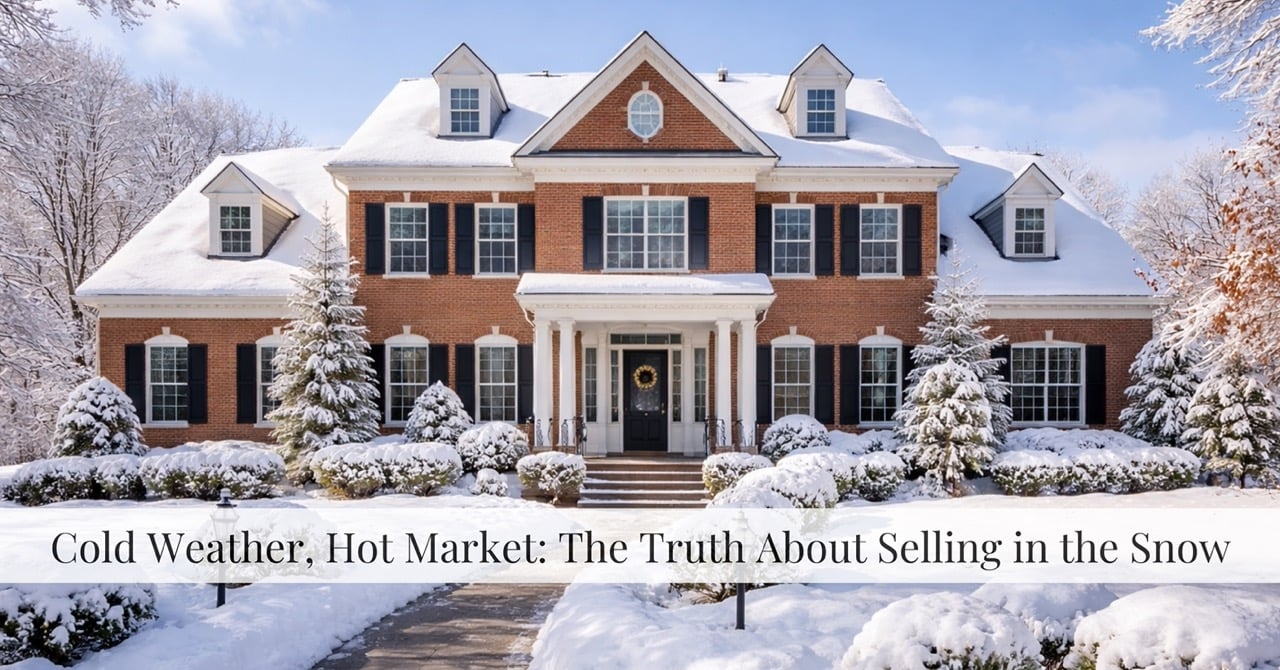
Cold Weather, Hot Market: The Truth About Selling in the Snow
Krissy Cruse January 21, 2026
Krissy Cruse January 21, 2026
Winter weather has a way of slowing everything down — including real estate. If your home is actively for sale during a snowstorm, it’s helpful to understand what’s normal, what’s temporary, and what deserves immediate attention.
The most noticeable impact of a snowstorm is reduced showing activity. Buyers are less inclined to venture out during poor weather, and many showings are simply rescheduled rather than canceled outright. Open houses typically see little to no foot traffic during storms and are often postponed entirely. This slowdown can feel concerning, but it’s important to remember that it’s weather-related, not market-related.
Snow also limits curb appeal. Even the most charming home can feel less inviting when driveways, walkways, and landscaping are buried — and buyers often make snap judgments before they ever step inside.
While activity drops, the buyers who do schedule showings during a storm tend to be more serious and familiar with winter weather patterns. Weather naturally filters out casual lookers, leaving motivated buyers who have a real need or timeline. Additionally, listings that remain active through a storm often benefit from pent-up demand once conditions improve, leading to a quick rebound in showings and interest.
Snowstorms bring real risks, especially for homes that are vacant or lightly occupied. Homeowners should pay close attention to:
Heat levels: Ensure the thermostat is set high enough to prevent frozen pipes (generally no lower than 55°F).
Frozen or burst pipes: Pay special attention to exterior walls, basements, crawl spaces, and under sinks.
Ice dams: Heavy snow combined with heat loss can cause ice buildup along roof edges, leading to water intrusion.
Power outages: Extended outages can cause heating systems to shut down, increasing the risk of frozen plumbing.
Snow removal: Walkways, steps, and driveways should be cleared when possible for safety and buyer accessibility.
Vacant properties: These require frequent check-ins — either by the homeowner, agent, or property manager — to ensure systems are functioning properly.
A short period of neglect during extreme cold can turn into costly repairs and unnecessary complications during a sale.
A snowstorm may temporarily pause showing activity, but it does not change your home’s value or the overall market. With proper preparation and vigilance — especially around heating and plumbing — selling during winter weather can be navigated smoothly. Once the snow melts, buyer activity typically rebounds quickly, often with renewed urgency.
If your home is currently on the market during severe weather, staying proactive behind the scenes can make all the difference when buyers are ready to move again.
Stay up to date on the latest real estate trends.



I am committed to guiding you every step of the way—whether you're buying a home, selling a property, or securing a mortgage. Whatever your needs, I've got you covered.

Krissy Cruse
43777 CENTRAL STATION DR STE 390 ASHBURN VA 20147