The Heritage Hunt Number That Isn't on the Listing Sheet
September 3, 2026
September 3, 2026
Here is the thesis worth sitting with before you write an offer in Heritage Hunt: the price on the listing sheet is not the number you need to budget for at settlement. It is one line in a longer ledger, and the biggest line most buyers miss is not a fee at all. It is a full extra year of dues, due in cash, on the day you close.
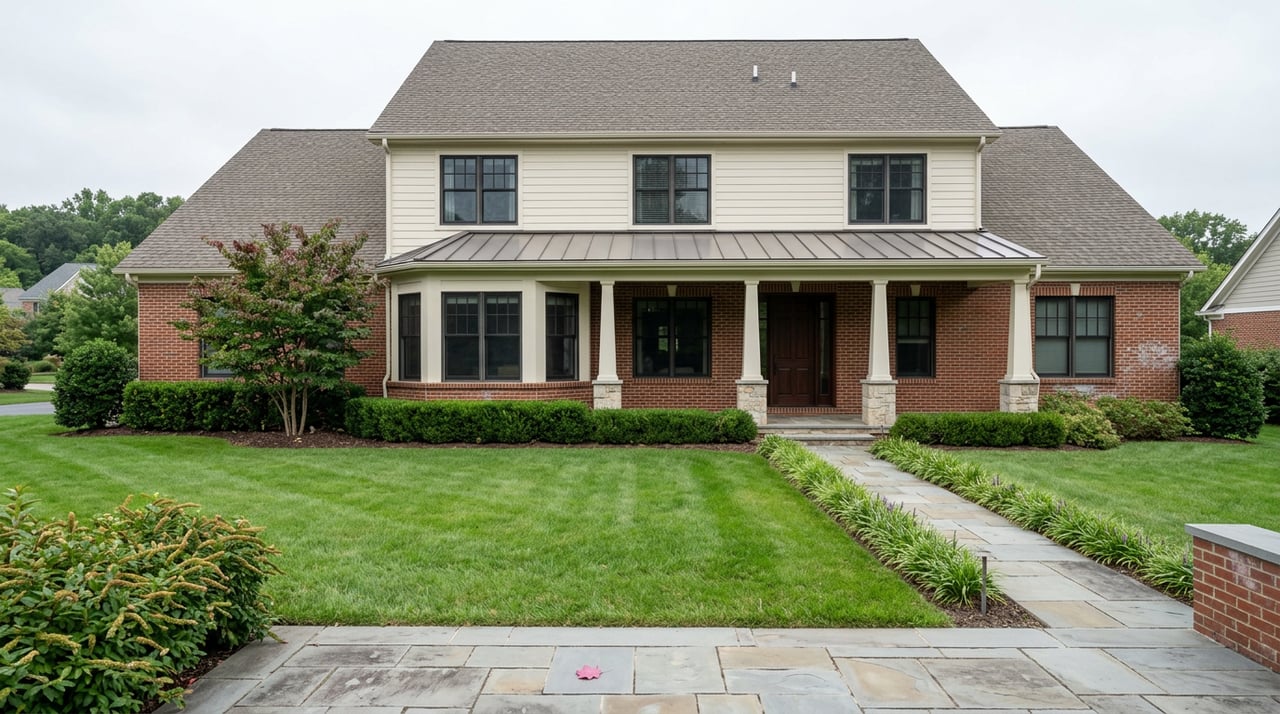
Heritage Hunt is Gainesville's gated, active-adult community off I-66 at exit 43B, 750 acres and 1,863 homes built around a resident-owned, Arthur Hills-designed 18-hole golf course. It reads on paper like a straightforward HOA purchase. It isn't quite. The community's own homeowners association pages spell out a fee structure that rewards a buyer who reads past the sale price, and punishes one who doesn't.
Start with the number every buyer sees first: the annual HOA assessment. For 2026, Heritage Hunt's rate is $5,040 a year, payable in $420 monthly installments. Back in 2017, that same assessment was $3,480 a year, or $290 a month. That is an increase of $1,560 a year, roughly 45 percent, over nine years.
Forty-five percent over nine years is not a scandal. Amenity-rich communities with two clubhouses, an 18-hole course, and full-time landscaping and snow removal cost more to run every year, and Heritage Hunt's dues fund exactly that. But it matters for one specific reason: if you are comparing Heritage Hunt's current $420 monthly figure to a snapshot you saw a few years ago, or to a friend's dues from when they bought, you are comparing the wrong year. Run the math on the number posted for the current year, not the number you remember.
The dues themselves are not the surprise. The surprise is what happens at settlement.
Heritage Hunt requires every buyer to pay a one-time, non-refundable contribution to working capital, and that contribution is set equal to a full year's HOA assessment. In 2026, that means $5,040, paid at closing, in addition to the assessment you will then keep paying monthly going forward. Put plainly: your first year in a Heritage Hunt home costs you the annual assessment twice, once as the working capital line at the table and once as the twelve monthly payments that follow.
This is standard practice for many established HOAs and it funds the association's reserves rather than your own account, but it changes the cash-to-close math in a way a listing price never signals. A buyer comparing Heritage Hunt to a non-age-restricted resale a few miles away needs to add that number to their closing costs before the comparison is fair.
Virginia law requires sellers in communities like this one to hand buyers a resale disclosure packet before closing, covering the HOA's assessment figures, any outstanding violations, governing documents, and board minutes. Heritage Hunt's association quotes a routine turnaround of up to two weeks for that packet, with a base fee of $317.95 covering the resale package and inspection. Rush processing, post-closing requests, and statement-of-account requests each carry a separate $70.66 fee.
Two weeks sounds harmless until it collides with a financing contingency or a standard inspection window written before anyone checked how long the packet actually takes. If your contract timeline assumes documents will show up in a few days, build in the two weeks instead, and order the packet early through the association's designated management portal rather than waiting on the onsite HOA office, which does not process these requests directly.
Condominium buyers should ask one more question before they sign. Heritage Hunt's own real estate guidelines note that the community's 154 condo units carry additional requirements on top of the standard disclosure packet. The specifics vary by building, so a buyer under contract on a condo unit should confirm exactly what extra documentation applies before the inspection period closes, not after.
Here is the piece that changes how a buyer should think about the whole purchase. The HOA assessment does not include golf. Membership at the resident-owned country club is a separate, optional decision, priced on its own scale:
| Membership Component | Typical Range |
|---|---|
| Initiation fee | $0 to $2,500 |
| Annual dues | $0 to $5,000 |
| Structure | Full Golf, Sports, Social, or Family tiers |
A buyer who assumes their $420 monthly dues buy them into the country club is planning around the wrong number. A non-golfer's HOA payment funds landscaping, the clubhouse, the pools, and common-area upkeep, not tee times. A golfer needs to price membership as its own line, separate from the settlement sheet entirely, and decide on a tier before assuming what their total monthly cost will be.
Heritage Hunt's age restriction is a structural feature of the community, not a suggestion. At least one occupant in every household must be 55 or older, and residents are required to provide reasonable proof of age to the association. That rule follows the home if you later decide to lease it. A long-term lease is allowed, but the association reviews every lease and the tenant must meet the same 55-plus standard. Short-term, Airbnb-style rentals are not permitted at all.
That single fact reshapes how an investor-minded buyer should think about Heritage Hunt. This is not a community where a purchase doubles as a flexible short-term rental play. It is a community where the leasing path exists, but only for a tenant who fits the same age profile the HOA verifies for owners.
A few smaller logistics round out the closing-day picture, and they are the kind of detail only someone who has walked a buyer through settlement here would flag:
None of these show up on a listing photo. All of them show up on your first bill.
Buyers weighing Heritage Hunt often cross-shop it against Regency at Dominion Valley in Haymarket and Del Webb's Potomac Green in Ashburn, two other gated 55-plus communities in the same commuting radius. Each has its own assessment structure, its own working capital or initiation line, and its own resale disclosure process under Virginia law. Comparing list prices alone tells you almost nothing. Comparing the full settlement math, dues plus the one-time contribution plus whatever membership tier you choose, tells you what the home actually costs in year one.
That is the number worth running before you write an offer, not after.
Does the Heritage Hunt HOA assessment include golf membership? No. The $5,040 annual assessment covers common-area maintenance, amenities access, and services like trash and snow removal. Golf membership at the resident-owned country club is a separate, optional purchase with its own initiation fee and annual dues.
Can I rent out a home I buy in Heritage Hunt? Long-term leases are permitted, but the HOA reviews every lease and the tenant must satisfy the same 55-plus age requirement as an owner. Short-term or vacation-style rentals are not allowed.
How long does the resale disclosure packet take, and does it affect my contract deadlines? The association's routine turnaround is up to two weeks. Build that into your inspection and financing contingency timelines rather than assuming documents will arrive within a standard five- or seven-day window.
Do condo buyers face different paperwork than buyers of detached or patio homes? Yes. Heritage Hunt's 154 condominium units carry additional HOA requirements beyond the standard disclosure packet. Ask your agent to confirm the specific extra documents for your unit before your inspection period ends.
If you are weighing Heritage Hunt against another 55-plus community in Haymarket, Gainesville, or Ashburn and want the full settlement math run before you write an offer, Krissy Cruse can walk you through the numbers and schedule a free consultation.
Stay up to date on the latest real estate trends.



I am committed to guiding you every step of the way—whether you're buying a home, selling a property, or securing a mortgage. Whatever your needs, I've got you covered.

Krissy Cruse
43777 CENTRAL STATION DR STE 390 ASHBURN VA 20147